
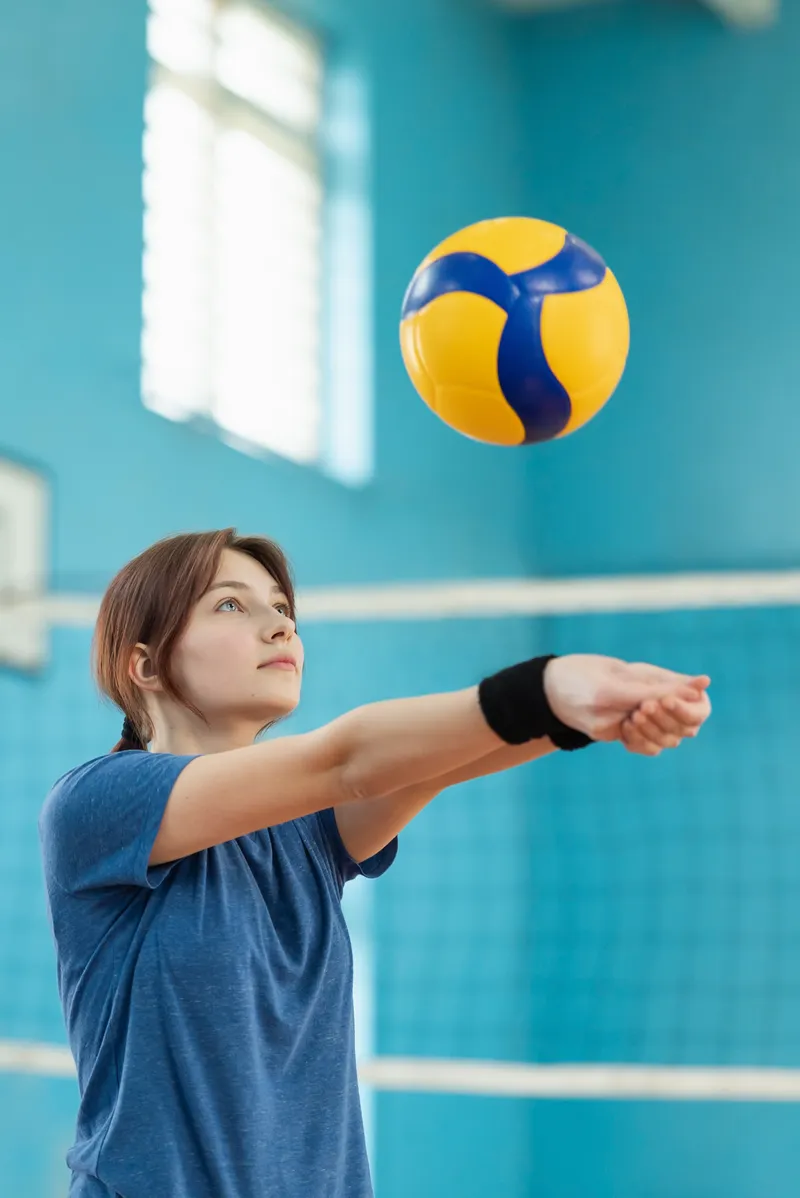
A student bumping a volleyball in the gymnasium

Health and Physical Education

PAD1O

Healthy Active Living Education

This course equips students with the knowledge and skills they need to make healthy choices now and lead healthy, active lives in the future. Through participation in a wide range of physical activities, students develop knowledge and skills related to movement competence and personal fitness that provide a foundation for active living. Students also acquire an understanding of the factors and skills that contribute to healthy development and learn how their own well-being is affected by, and affects, the world around them. Students build their sense of self, learn to interact positively with others, and develop their ability to think critically and creatively.

Tuition

$580

One Ontario credit, enrolled online.

Grade
9
Credit
1.0
Delivery
Online

No prerequisite. Open to all eligible students.

Tuition

$580

About this course

This course equips students with the knowledge and skills they need to make healthy choices now and lead healthy, active lives in the future. Through participation in a wide range of physical activities, students develop knowledge and skills related to movement competence and personal fitness that provide a foundation for active living. Students also acquire an understanding of the factors and skills that contribute to healthy development and learn how their own well-being is affected by, and affects, the world around them. Students build their sense of self, learn to interact positively with others, and develop their ability to think critically and creatively.

What you'll learn

  1. Take part in a wide range of outdoor physical activities that build movement skills and personal fitness.

  2. Develop the movement competence and confidence to stay active outdoors well beyond the classroom.

  3. Learn how everyday choices around nutrition, safety, and well-being shape lifelong health.

  4. Build teamwork, communication, and decision-making skills through shared outdoor activity and challenge.

Curriculum expectations

The overall expectations set by the Ontario curriculum, grouped by strand. Drawn from The Ontario Curriculum, Grades 9–10: Health and Physical Education (2015).

A. Active Living

  • A1participate actively and regularly in a wide variety of physical activities, and demonstrate an understanding of factors that can influence and support their participation in physical activity now and throughout their lives
  • A2demonstrate an understanding of the importance of being physically active, and apply physical fitness concepts and practices that contribute to healthy, active living
  • A3demonstrate responsibility for their own safety and the safety of others as they participate in physical activities

A. Living Skills

  • AA1demonstrate personal and interpersonal skills and the use of critical and creative thinking processes as they acquire knowledge and skills in connection with the expectations in the Active Living, Movement Competence, and Healthy Living strands for this grade

B. Movement Competence: Skills, Concepts, and Strategies

  • B1perform movement skills, demonstrating an understanding of the basic requirements of the skills and applying movement concepts as appropriate, as they engage in a variety of physical activities
  • B2apply movement strategies appropriately, demonstrating an understanding of the components of a variety of physical activities, in order to enhance their ability to participate successfully in those activities

C. Healthy Living

  • C1demonstrate an understanding of factors that contribute to healthy development
  • C2demonstrate the ability to apply health knowledge and living skills to make reasoned decisions and take appropriate actions relating to their personal health and well-being
  • C3demonstrate the ability to make connections that relate to health and well-being – how their choices and behaviours affect both themselves and others, and how factors in the world around them affect their own and others’ health and well-being

How you'll study

DeliveryOnline
Delivered fully online through Vaughan College's learning platform, with live teacher support. Online students can also call into the live in-person classroom through Google Classroom anytime they want extra guidance.
Fast-trackAvailable
Complete the credit in a condensed schedule. Useful for upgrading, course recovery, or summer acceleration.
Credit value1.0 OSSD credit
Counts toward the 30 credits required for the Ontario Secondary School Diploma.

Assessment and evaluation

Every Vaughan College course follows Ontario’s Growing Success policy. Assessment is continuous: teachers gather evidence of learning through observation, conversation, and student work, and give feedback that helps a student improve before the work is graded.

Evaluation — the judgement that produces a mark — measures achievement of the Ontario curriculum expectations across four categories: Knowledge and Understanding, Thinking, Communication, and Application. A student’s grade reflects how well they have met the expectations, with greatest weight given to their most consistent and most recent work.

The final grade

The final percentage grade is based on two parts. Seventy percent comes from work completed throughout the course, weighted toward more recent and more consistent achievement. The remaining thirty percent comes from a final evaluation near the end of the course — an examination, performance, essay, or other culminating task suited to the subject.

Grades are reported against the provincial standard, where Level 3 (70 to 79 percent) represents the standard expected of students at that grade. A grade of 50 percent or higher earns the credit.

The report card

Achievement is reported on the Ontario Provincial Report Card, which records the percentage grade and the credit earned for each course. Grades for completed credits carry forward onto the Ontario Student Transcript, the official record used for graduation and post-secondary admission.

The report card also reports six learning skills and work habits, separately from the academic grade: responsibility, organisation, independent work, collaboration, initiative, and self-regulation. These describe how a student approaches their learning, and universities and colleges do read them.

Considerations for program planning

The Ontario curriculum asks every course to account for a set of cross-curricular considerations — the ways a subject connects to students’ broader development and to the world beyond the classroom. They shape how each course is planned and taught.

Students with special education needs

Teachers plan for the full range of learners. Where a student has an Individual Education Plan, the accommodations, modifications, or alternative expectations it sets out are built into how the course is taught and assessed, so the student can demonstrate learning in the way that works for them.

English language learners

Students who are still developing their English receive scaffolding — adjusted materials, extra time, and language support — while working toward the same curriculum expectations. Assessment separates what a student knows and can do from their stage of English acquisition.

Environmental education

Wherever the subject allows, coursework draws connections to the environment and sustainability, helping students understand how the topics they study relate to the natural world and their responsibilities within it.

Healthy relationships

Every course contributes to a school culture built on respect. Students practise the communication and collaboration skills that underpin healthy, equitable relationships with peers and teachers.

Equity and inclusive education

Materials and discussion reflect a range of experiences and perspectives so every student sees themselves in the work. An inclusive classroom holds high expectations for all learners and treats difference as a strength.

Financial literacy

Where it fits the subject, students apply mathematical and analytical thinking to real financial questions — budgeting, credit, and informed decision-making — so the skills carry into life after graduation.

Literacy, mathematical literacy, and inquiry skills

Reading, writing, oral communication, numeracy, and structured inquiry are developed in every subject, not only in English and mathematics. These are the cross-curricular skills that make learning in every other course possible.

Critical thinking and critical literacy

Students learn to weigh evidence, question assumptions, and interpret what they read, watch, and hear — distinguishing fact from opinion and recognising point of view and bias.

The role of the school library

Library and information resources support research and independent reading. Students learn to locate, evaluate, and use sources responsibly, building the research habits that post-secondary study assumes.

Information and communications technology

Technology is used to support learning and to build the digital skills students need, alongside an understanding of how to work online safely, responsibly, and with attention to their own well-being.

Education and career/life planning

Coursework helps students connect what they are learning to their goals beyond high school, so each credit is a step in a deliberate plan rather than an isolated requirement.

Cooperative education and experiential learning

Where a subject supports it, hands-on and experiential learning connect classroom study to real settings, giving students a clearer sense of how the material is used in work and in the community.

Health and safety

In any course involving activity, equipment, or materials, safe practice is taught and expected. Students learn the procedures that protect themselves and others.

Ethics

Many subjects raise questions of right and wrong. Students learn to examine ethical issues thoughtfully, consider more than one position, and support a view with reasons — including academic honesty in their own work.

Teaching and learning at Vaughan College

Courses are taught in small classes, which lets teachers adapt to how each student learns. A single lesson might combine direct instruction, discussion, independent practice, collaborative work, and hands-on or inquiry-based tasks, chosen to suit the material and the students in the room.

Students receive regular, specific feedback and can move at a pace that fits their goals, whether they are working ahead, recovering a credit, or balancing school with other commitments. The aim is that every student understands not just what they are learning, but why it matters and where it leads.

In-class learning, from anywhere

Be in the classroom from anywhere in the world.

Some of our online courses run alongside a live class in our Vaughan classroom, and which ones changes each semester. When a course offers it, you’ll see a Live now tag on the course or a Hybrid toggle on its page. Turn it on and you can join the real in-person lesson through Google Classroom instead of a separate online-only section, with the same teacher as it happens. Add it when you enrol or anytime after; in-person students can join the same way on the days they study from home.

Next Step

Ready to add this credit?

Add the course to your cart for enrolment, or speak with our admissions team about pathway sequencing, prerequisites, and credit equivalency from a previous school.